
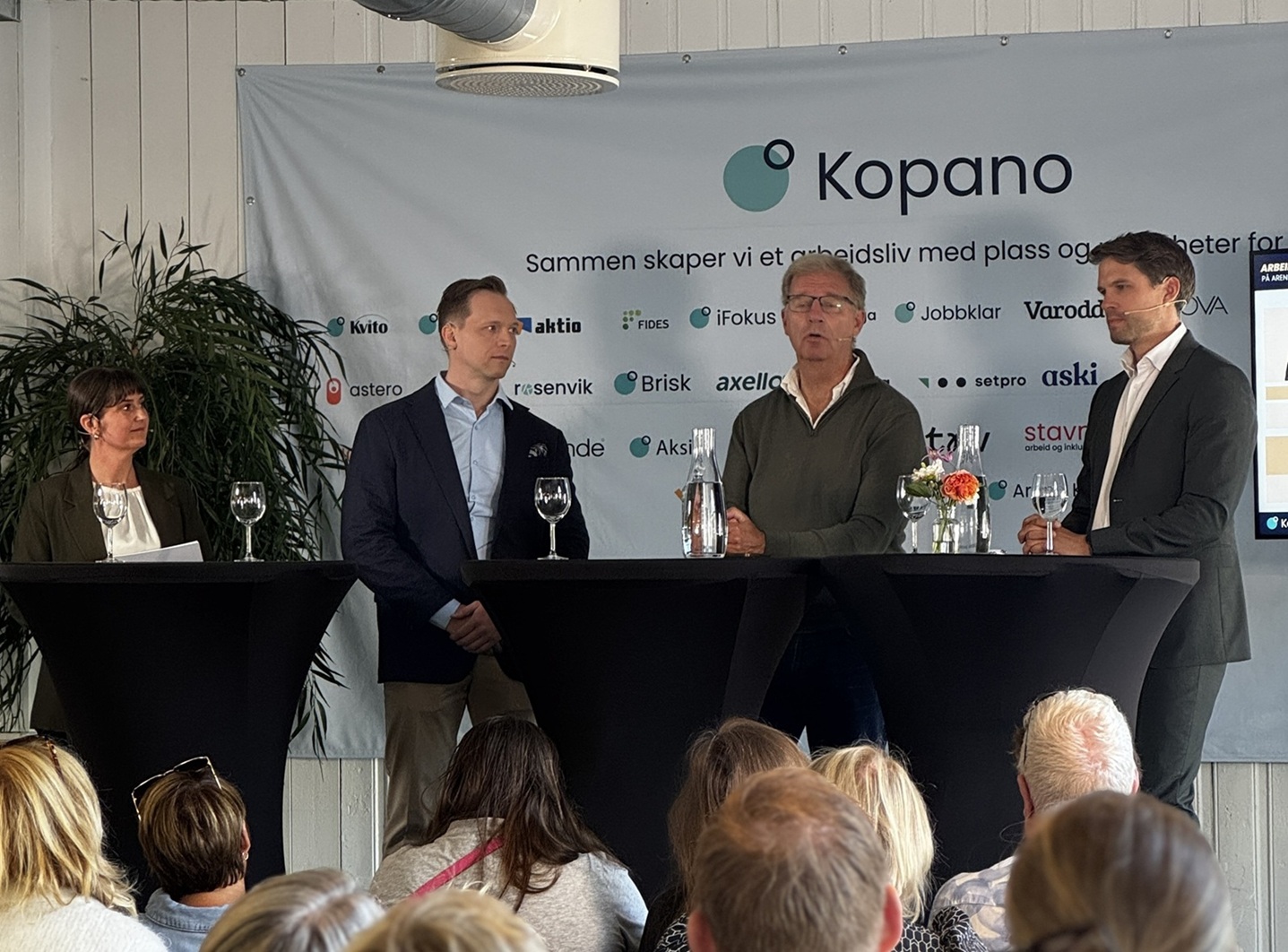
During this year’s Arendal Week, the Norwegian Esports Federation participated in two panel discussions that explored various perspectives on gaming, screen time, social exclusion, and esports. Common to both was a question that is becoming increasingly important: How should we, as a society, understand a digital everyday life that is already a completely natural part of the lives of children and young people?
The answer cannot be reduced to simply how many hours one spends in front of a screen.
The debate about children, teens, and screen time often revolves around time. How many hours is too many? When should screen time be limited?
These are relevant questions, but time alone tells us very little about what is actually going on.
There is a difference between passive use and active participation. There is a difference between scrolling on your own and collaborating with others, solving complex problems, learning, creating, or competing as part of an organized team.
That is why we need to ask more questions than just how much time children and young people spend in front of a screen. We also need to ask what they are doing, who they are doing it with, what they get out of it, and how their digital lives affect the rest of their daily lives.
That doesn't mean time is irrelevant. Sleep, physical activity, school, relationships, and a balanced daily routine are still important. But giving good advice requires that we understand the content and context—not just count the minutes.
Gaming and esports are, first and foremost, activities that a great many children and young people spend time on because they find them interesting, social, and challenging. At the same time, we need to do a better job of recognizing the skills that can actually be developed in these environments.
Collaboration, communication, problem-solving, strategic thinking, learning under pressure, and digital literacy are examples of skills that can also be valuable far beyond the game—both in school and in the workplace.
This is particularly important when we discuss social exclusion.
Many young people are not in school or the workforce. At the same time, some of them spend a significant amount of time in digital spaces where they master skills, learn, organize, collaborate, and build expertise.
In that case, society’s first question shouldn’t be what’s wrong with their interests. We should also be curious about what they’re actually capable of, and how these skills can serve as a bridge to education, the workforce, and other communities.
For some people, gaming can be part of the problem. For others, it can be part of the solution. A modern support system must be able to tell the difference.
The same applies to us as parents and adults.
Gaming is a central part of growing up for a great many children and young people. It is therefore not enough for adults to remain on the sidelines and only get involved when a problem arises.
Ask them what they're playing. Who they're playing with. What they're trying to improve on. Why this particular game matters to them.
We don’t need to understand all the games or be able to participate at the same level. But we should understand that the friendships, achievements, conflicts, defeats, and experiences that take place online can be just as real for a child as what happens on the soccer field, in the schoolyard, or at the after-school club.
Interest also gives adults a much better starting point for discussing boundaries, sleep, spending, language, behavior, and balance when it is actually necessary.
For the Norwegian Esports Federation, this is also about something bigger.
We are working to ensure that esports is treated with the same fundamental respect and recognition as other organized recreational and athletic activities.
Esports doesn't have to be identical to traditional sports to deserve that.
Children and young people train. They compete. They set goals. They win and lose together. They build teamwork, identity, and a sense of community. Many of them refer to esports as their sport.
They deserve for adults, politicians, and the sports community itself to approach this activity with curiosity and respect, and for us to develop a supportive and health-promoting framework around it rather than rejecting it simply because it takes place in a digital arena.
That is precisely why events like Arendalsuka are important.
We need forums where researchers, policymakers, parents, professional communities, organizations, and the esports community can challenge one another and find better solutions together.
The issues related to screen time, gaming, and digitalization are real. But they cannot be solved by pitting the digital world against “real” life.
Digital technology is already part of children’s and young people’s everyday lives. Our task is to better understand it, establish a sound framework for it, and at the same time recognize the value it offers.
For many children and young people, gaming and esports are a space for community, mastery, and personal growth. They deserve to be met with more curiosity, more knowledge—and less prejudice.