
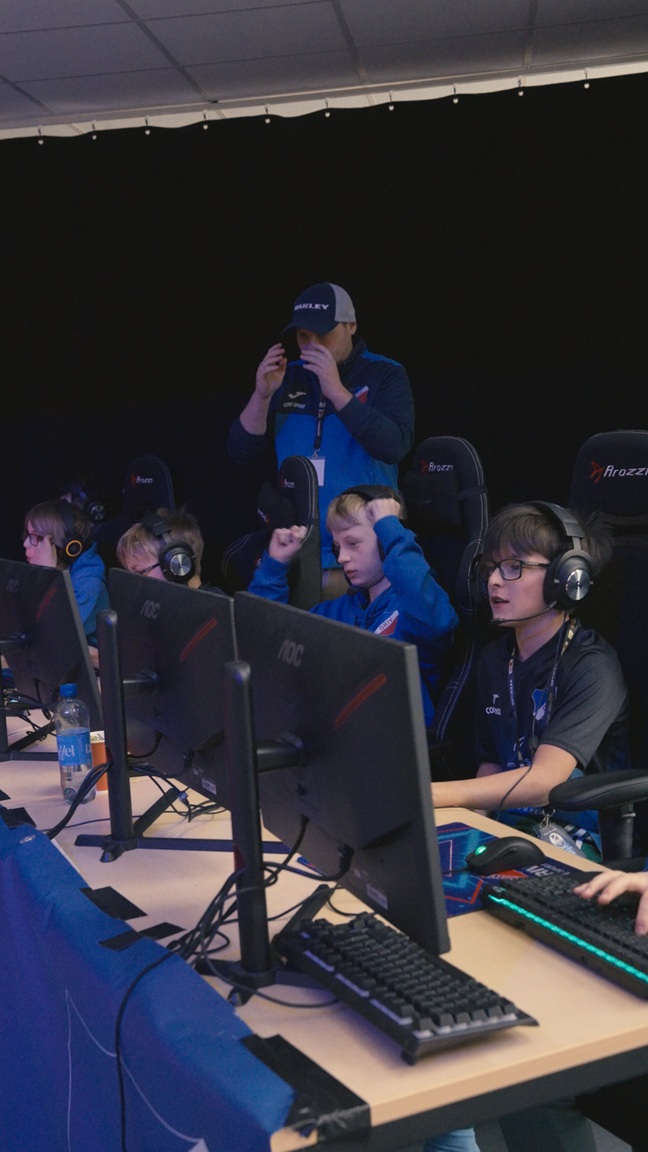
A new European study of volunteer esports coaches shows that the role of a coach involves much more than just skills in the game itself. A sense of security, relationships, communication, and supportive environments for development are key. These findings are particularly relevant as Norway’s first comprehensive esports coaching program is set to launch this fall.
The study " Coaching Beyond the Game: A Qualitative Study of Volunteer Coaches in European Grassroots Esports " has been published in the scientific journal *Frontiers in Sports and Active Living*.
The researchers interviewed 17 volunteer esports coaches from Norway, Denmark, and the Netherlands to investigate how the coaches themselves understand and carry out their roles in organized grassroots esports.
One clear finding was that the coaches rarely defined their value in terms of being the best player in the room. Instead, they emphasized the importance of being stable and reliable adults, building relationships, setting boundaries, managing communication, and contributing to inclusive and meaningful activities for children and youth.
– This challenges the notion that a good esports coach must first and foremost be an expert in the game. In grassroots esports, we see that the ability to lead people and create a positive environment can be just as important. Of course, the coach should contribute to development, but the role is far broader than just what happens within the game,” says André Baumann, lead author of the study and secretary general of the Norwegian Esports Federation.
At the same time, the study highlights several challenges. Many of the coaches had limited access to formal coaching education and relied heavily on their own experiences, other coaches, and online resources when developing their own coaching practices.
Access to volunteers, equipment, structured coaching expertise, and practical tools also influenced how organized and development-oriented the activities could be.
The findings therefore point to a need for coach training that is tailored to the realities of grassroots esports. The goal should not be to turn all volunteer coaches into elite coaches, but to provide them with a solid professional foundation, concrete tools, and expertise in areas such as communication, inclusion, safety, and player development.
These findings come as the Norwegian Esports Federation, the Grassroots Esports Alliance, and Active Gamers are finalizing Norway's first comprehensive esports coaching program.
The program is structured according to the framework of the Norwegian Sports Confederation’s Coaching Pathway and covers both Coach Level 1 and Coach Level 2. It is designed to provide volunteer esports coaches with expertise in areas such as pedagogy, activity leadership, safe training environments, inclusion, health, player development, and game-specific training.
“It’s interesting that research now confirms many of the same needs we’ve been trying to address through our coach education program. Our goal isn’t for all coaches to know everything, but for them to have a solid professional foundation and concrete tools that make them more confident in their role as coaches,” says Baumann.
The program will launch in the fall of 2026 and will be an important part of ongoing efforts to develop coaching expertise and create more structured development environments in Norwegian grassroots esports.
The study was led and authored by André Baumann, secretary general of the Norwegian Esports Federation, in collaboration with Loizos Georgiou, Robert Juul Jønsson, Matthew Watson, Ståle Pallesen, and Rune Aune Mentzoni.
"Coaching Beyond the Game: A Qualitative Study of Volunteer Coaches in European Grassroots Esports " has been published as open access in *Frontiers in Sports and Active Living*.
Read the full study:
https://www.frontiersin.org/journals/sports-and-active-living/articles/10.3389/fspor.2026.1913015/full