

The General Assembly re-elected Ole Rogstad Jørstad (Kolvereid IL) as president and Pål Thomassen (Stoppen SK) as second vice president, while Hilde Gunn Ørland (Ehra E-sport Kvadrat) was elected as the new first vice president. At the same time, the General Assembly approved several important measures to strengthen the organization, its range of activities, and its efforts to unify Norwegian esports.
The Federation Assembly brought together 28 voting representatives (from 19 member clubs) at the start of the meeting and addressed the annual report, financial statements, bylaw amendments, long-term plan, membership dues, audit, and elections. In addition, a clear course was set for further work on membership growth, competitive activities, and a possible future application for admission to the Norwegian Sports Federation.
In his opening remarks, President Ole Rogstad Jørstad emphasized that NESF is entering a phase characterized by a clearer structure, increased activity, and greater ambitions for Norwegian esports. He highlighted organizational development, international efforts, and the desire to bring the community closer together moving forward. At the same time, he said he was proud to be able to announce another major piece of news that same day. Following the announcement about the Esports Nations Cup, he also revealed that NESF will now have its own competition platform. The news was elaborated on by Stein Willman from our partner Skagerak Technologies, who explained that the partnership will provide the federation with its own high-profile platform for tournaments and league play, and help boost activity within the clubs.

Before the formal proceedings began, the Federation Congress was also presented with the new competition platform and the partnership with Skagerak. During the opening remarks, it was emphasized that increased activity organized by the federation itself will be crucial moving forward, and that the new platform will contribute to league play, tournaments, and a stronger foundation for membership growth and a future NIF application. Reference was also made to new opportunities related to the Nations Cup and a broader range of competitive offerings for member clubs.
The new executive board consists of three people: Ole Rogstad Jørstad will continue as president, Hilde Gunn Ørland will join as the new first vice president, and Pål Thomassen was reelected as second vice president. The elections were held without opposing candidates.

The elections signify both continuity and renewal. Jørstad will thus continue his work to further build the organization, while Ørland joins as a new member of the executive board at a time when the federation aims to develop its range of activities, strengthen its membership systems, and continue the process of bringing the esports communities closer together. Thomassen will also continue to play a central role in the federation’s ongoing strategic work.
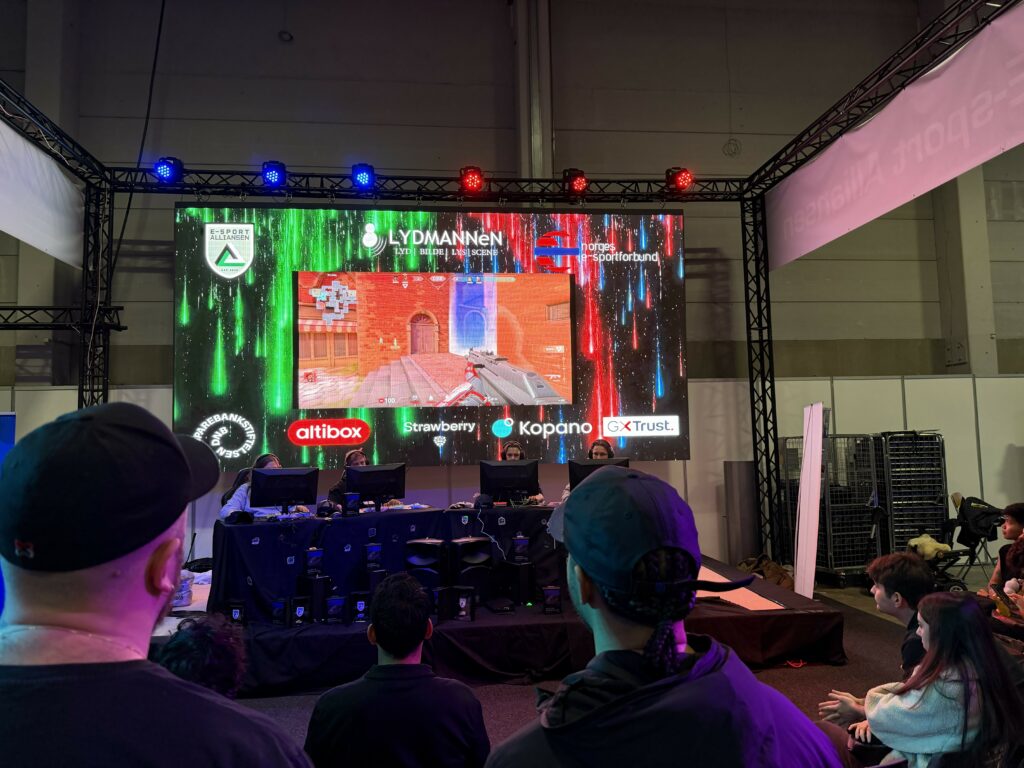
One of the most important decisions was that the Federation Assembly approved the establishment of a merger committee to follow up on the adopted merger plan between the Norwegian Esports Federation and the Grassroots Esports Alliance. At the same time, the board was authorized to appoint members and get the work underway. This issue was also a central topic of debate, with several participants emphasizing the need to bring Norwegian esports together more strongly under a single, unified structure. The alliance’s annual meeting has already approved the merger plan.
The Federation Assembly also resolved to maintain its goal of continuing to work toward admission to the Norwegian Sports Federation. The resolution states that this remains a clear ambition, but that it requires verifiable membership registration, a robust membership system, and a clear competition platform.
At the same time, the General Assembly approved 14 out of 15 proposed amendments, including several important measures to open NESF to more types of membership and clarify the organization’s structure. The most significant change is that both individual players and avatar teams can now become members of the federation, which lowers the barrier to participating in NESF’s activities and competitions. It was also decided that the General Assembly will set separate membership fees for member clubs, individual members, and avatar teams. At the same time, it was confirmed that only member clubs retain the right to vote at the General Assembly. NESF is thus opening the door to broader participation and more membership categories, but maintains that it is the clubs that constitute the formal democratic representation within the federation
Among the changes was also a clarification allowing the NESF representative elected to the IESF Board to attend NESF Board meetings with the right to speak, make proposals, and vote on international matters.
The Federation Assembly therefore also adopted a new membership fee model. The club membership fee was set at 1,500 kroner per club per year. In addition , the Congress adopted a model with a fee of 50 kroner for individual members and 50 kroner per player on avatar teams per year. This came after an alternative proposal by delegate Lars Petter Østrem from Driv IL was put forward and gained widespread support.
In addition, the long-term plan for 2026–2029 and the long-term budget for 2026–2027 were adopted. The plan states that NESF will build a unified organization for Norwegian esports, with stronger grassroots efforts, a clearer competitive structure, better membership solutions, and increased legitimacy both nationally and internationally.
The 2026 Federation Congress reflected the fact that NESF is in a phase where the organization is set to further develop and professionalize. Both the debates and the resolutions pointed in the same direction: more activities, a clearer structure, stronger membership systems, and continued efforts to unify esports in Norway. With a new presidency in place and several key decisions made, the federation is now entering its next phase with a clear mandate from the clubs. A more journalistic publishing style for the website’s front page, featuring a title, lead, subheadings, and a slightly sharper NESF tone.